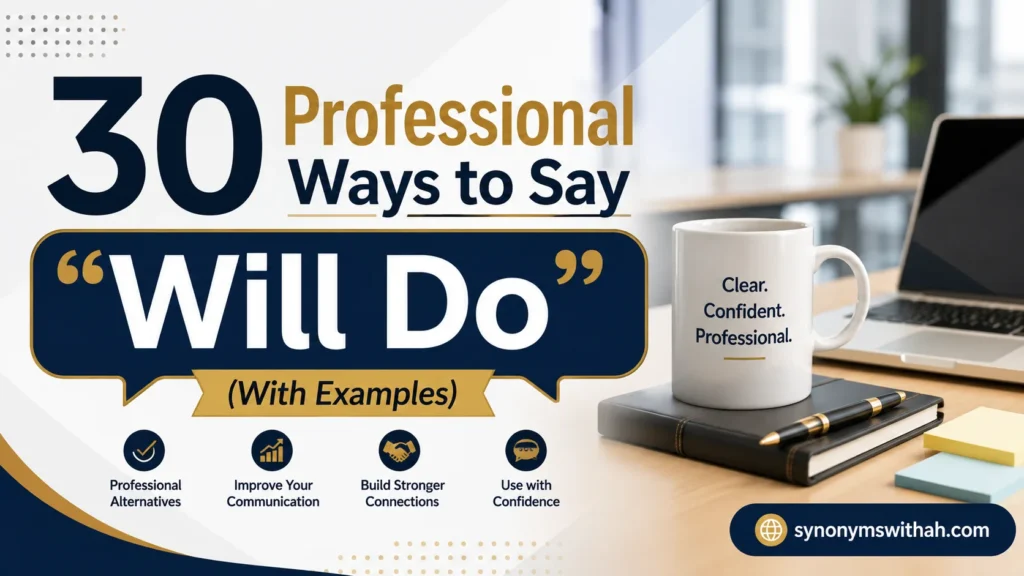

The guide 30 Professional Ways to Say “Will Do” (With Examples) helps you choose professional words for emails, email, and workplace communication with better communication skills. It explains why “will do” is a widely used phrase, yet a professional alternative may be the right choice for business communication, every professional conversation, or daily conversation, helping your response sound more formal, friendly, respectful, or thoughtful, depending on the situation.
This guide presents a range of alternatives, different ways, and useful options that help you communicate with confidence. Based on real work experience, carefully choosing the correct tone creates a stronger impression with a manager, client, customer, coworker, coworkers, and bosses. The list also includes clear meanings, explanations, examples, and best uses so every professional reply feels more polished and effective.
Whether you are replying, talking, offering support, giving acknowledgment, showing commitment, confirming action, or promising completion, the right language helps you get along with others. These offers make every simple response more natural while improving collaboration and making each interaction feel more professional and genuine.
What Does “Will Do” Mean?
The phrase “Will do” is a short acknowledgment that tells someone you have understood their request and intend to complete it. It acts as a quick confirmation that you will take the required action without needing further discussion. In everyday conversations and workplace communication, people often use it to show agreement, willingness, and responsibility. Although it is simple and effective, the phrase can sometimes sound too casual in formal emails or professional settings. Choosing a more polished alternative helps your response feel more respectful, clearer, and better suited to business communication, especially when speaking with clients, supervisors, or senior colleagues.
CLICK HERE: 30 Other Ways to Say “Thank You for Your Interest” (With Examples)
Is It Professional to Say “Will Do”?
Yes, “Will do” is generally considered professional enough for casual workplace conversations and internal team communication. It communicates cooperation, reliability, and readiness to complete a task. However, because it is brief and informal, it may sound too casual when communicating with executives, clients, or people you do not know well. In those situations, using a more complete response such as “Certainly,” “I’ll take care of it,” or “I’ll handle it right away” creates a warmer and more polished impression. Matching your wording to the situation helps you appear professional, attentive, and courteous.
Advantages and Disadvantages of Saying “Will Do”
Advantages
- Short and easy to understand.
- Shows quick acknowledgment of a request.
- Sounds friendly and cooperative.
- Saves time in chats and instant messages.
- Clearly indicates you intend to complete the task.
- Works well among familiar coworkers.
Disadvantages
- May sound too informal in business emails.
- Lacks warmth in customer communication.
- Doesn’t specify when the task will be completed.
- Can appear abrupt because of its brevity.
- Less suitable for executive or client conversations.
- Offers little reassurance beyond agreement.
30 Professional Ways to Say “Will Do”
- Certainly
- Absolutely
- I’ll Take Care of It
- Consider It Done
- I’ll Handle It
- I’d Be Happy To
- Of Course
- I’ll Get Right On It
- Happy To Help
- I’ll Make It Happen
- You Can Count On Me
- I’ll See To It
- I’ll Get It Done
- I’ll Be On It
- I’ll Follow Up
- I’ll Complete It Promptly
- I’ll Look Into It
- I’ll Address It
- Leave It With Me
- I’ll Arrange That
- I’ll Make Sure It Gets Done
- I’ll Prioritize It
- I’ll Take It From Here
- I’ll Get Started Right Away
- I’ll Ensure It’s Done
- I’ll Work On That
- I’ll Put It Together
- I’ll Manage It
- I’ll See What I Can Do
- I’ll Have It Ready
1. Certainly
Meaning
“Certainly” expresses confident agreement and confirms that you are willing to complete the requested task.
Definition
It is a formal expression used to show complete willingness and positive acceptance of a request.
Detailed Explanation
This alternative sounds more polished than “Will do.” It reassures the other person that you understand the request and are happy to carry it out. It works especially well in professional emails and customer service conversations where courtesy matters.
Scenario Example
Manager: Could you send me the updated report before noon?
You: Certainly. I’ll send it before 12 PM.
Best Use
Business emails, customer service, executive communication, and professional meetings.
Tone
Professional, polite, confident, and respectful.
2. Absolutely
Meaning
“Absolutely” communicates enthusiastic agreement and strong commitment.
Definition
It is a positive response that shows you fully support the request and intend to complete it.
Detailed Explanation
Unlike “Will do,” this phrase adds warmth and enthusiasm. It tells the other person that you’re not just agreeing—you are happy to help. It creates a positive impression in collaborative workplaces.
Scenario Example
Coworker: Can you review this proposal today?
You: Absolutely. I’ll review it this afternoon.
Best Use
Team collaboration, client communication, and workplace discussions.
Tone
Friendly, professional, enthusiastic, and supportive.
3. I’ll Take Care of It
Meaning
This phrase assures someone that you will personally handle the responsibility.
Definition
It means you accept ownership of the task until it is completed.
Detailed Explanation
“I’ll take care of it” sounds more reassuring than “Will do.” It gives confidence that you won’t simply start the task—you’ll make sure it is finished correctly.
Scenario Example
Supervisor: Can you update the client records?
You: I’ll take care of it before the end of the day.
Best Use
Professional emails, project management, and customer support.
Tone
Reliable, reassuring, and professional.
4. Consider It Done
Meaning
This phrase confidently promises that the task will be completed.
Definition
It expresses strong confidence and immediate commitment.
Detailed Explanation
Although slightly more conversational, “Consider it done” makes the other person feel assured that the request is already in capable hands. Use it only when you’re confident you can deliver.
Scenario Example
Manager: Can you prepare tomorrow’s presentation?
You: Consider it done.
Best Use
Internal workplace communication and team collaboration.
Tone
Confident, positive, and dependable.
5. I’ll Handle It
Meaning
This response confirms that you will personally manage the task.
Definition
It indicates responsibility and ownership for completing the requested work.
Detailed Explanation
This alternative is direct, professional, and reassuring. It works well when someone wants confirmation that the task has been assigned to a capable person.
Scenario Example
Coworker: Can someone contact the vendor?
You: I’ll handle it this afternoon.
Best Use
Office communication, project coordination, and business conversations.
Tone
Professional, dependable, and confident.
6. I’d Be Happy To
Meaning
This phrase expresses willingness while adding warmth and kindness.
Definition
It politely communicates that helping is a pleasure rather than an obligation.
Detailed Explanation
Compared with “Will do,” this alternative feels more personable. It is especially effective in customer-facing roles because it makes your response sound genuine and welcoming.
Scenario Example
Client: Could you send me the pricing details?
You: I’d be happy to. I’ll email them shortly.
Best Use
Customer service, hospitality, client emails, and professional networking.
Tone
Warm, friendly, courteous, and professional.
7. Of Course
Meaning
This phrase politely confirms your willingness to help.
Definition
It signals that the request is reasonable and you are glad to fulfill it.
Detailed Explanation
“Of course” sounds natural and friendly while remaining professional in many workplace settings. It works best when helping colleagues or responding to straightforward requests.
Scenario Example
Coworker: Can you proofread this document?
You: Of course. I’ll review it today.
Best Use
Everyday workplace communication and internal teams.
Tone
Friendly, polite, and cooperative.
8. I’ll Get Right On It
Meaning
This phrase indicates that you’ll begin working immediately.
Definition
It promises prompt action without unnecessary delay.
Detailed Explanation
This alternative is ideal when speed matters. It reassures the requester that their task is your current priority and demonstrates responsiveness.
Scenario Example
Manager: Please fix this issue immediately.
You: I’ll get right on it.
Best Use
Urgent tasks, customer support, and project management.
Tone
Prompt, proactive, and dependable.
9. Happy To Help
Meaning
This expression shows that assisting others is something you genuinely enjoy.
Definition
It combines willingness with appreciation for the opportunity to assist.
Detailed Explanation
This phrase adds a personal touch while remaining professional. It strengthens relationships because it sounds sincere rather than merely acknowledging the request.
Scenario Example
Coworker: Could you explain this process?
You: Happy to help. Let’s go through it together.
Best Use
Customer service, teamwork, mentoring, and support roles.
Tone
Friendly, welcoming, and supportive.
10. I’ll Make It Happen
Meaning
This phrase communicates confidence that you will achieve the requested outcome.
Definition
It emphasizes determination and commitment to delivering results.
Detailed Explanation
Compared with “Will do,” this alternative sounds stronger and more action-oriented. It reassures others that you are focused on finding a solution and completing the task successfully.
Scenario Example
Manager: Can we finish this project before Friday?
You: I’ll make it happen.
Best Use
Leadership, project management, and deadline-driven work.
Tone
Confident, proactive, determined, and professional.
11. You Can Count On Me
Meaning
This phrase assures the other person that they can trust you to complete the task.
Definition
It is a confident expression that communicates reliability, dependability, and commitment.
Detailed Explanation
Unlike “Will do,” this alternative emphasizes trust as well as action. It reassures the requester that you will follow through and meet expectations, making it ideal for strengthening professional relationships.
Scenario Example
Manager: Can you finalize the proposal before tomorrow’s meeting?
You: You can count on me. I’ll have it ready this afternoon.
Best Use
Leadership roles, team projects, and client communication.
Tone
Reliable, reassuring, and professional.
12. I’ll See To It
Meaning
This phrase promises that you will ensure the task is completed.
Definition
It expresses personal responsibility for making sure something happens successfully.
Detailed Explanation
“I’ll see to it” is more formal than “Will do.” It conveys accountability and gives confidence that you will oversee the task until it is finished properly.
Scenario Example
Supervisor: Please make sure everyone receives the updated schedule.
You: I’ll see to it immediately.
Best Use
Formal emails, management, and workplace communication.
Tone
Professional, responsible, and courteous.
13. I’ll Get It Done
Meaning
This phrase confirms that you will complete the requested work.
Definition
It is a direct commitment to finishing a task successfully.
Detailed Explanation
This alternative is stronger than “Will do” because it focuses on the outcome rather than simply agreeing. It works well when deadlines and accountability are important.
Scenario Example
Client: Can you send the revised contract today?
You: I’ll get it done before the end of the day.
Best Use
Business emails, project management, and task assignments.
Tone
Confident, dependable, and action-oriented.
14. I’ll Be On It
Meaning
This response tells someone that you’ll begin handling the task right away.
Definition
It communicates immediate attention and readiness to act.
Detailed Explanation
“I’ll be on it” sounds energetic and responsive. It reassures the other person that their request is already becoming a priority.
Scenario Example
Coworker: Can you investigate the software issue?
You: I’ll be on it right away.
Best Use
Internal team communication and urgent workplace requests.
Tone
Prompt, proactive, and cooperative.
15. I’ll Follow Up
Meaning
This phrase indicates that you’ll take the next necessary steps and provide updates if needed.
Definition
It means you’ll continue monitoring the matter until it reaches a conclusion.
Detailed Explanation
Unlike “Will do,” this response highlights ongoing responsibility rather than a single action. It is especially useful when tasks require communication with other people.
Scenario Example
Manager: Please check whether the client approved the proposal.
You: I’ll follow up and let you know what they say.
Best Use
Client communication, project updates, and customer service.
Tone
Professional, attentive, and organized.
16. I’ll Complete It Promptly
Meaning
This phrase promises timely completion of a task.
Definition
It expresses commitment to finishing the work without unnecessary delay.
Detailed Explanation
Adding “promptly” makes your response sound more professional and reassuring than simply saying “Will do.” It also sets an expectation of efficiency.
Scenario Example
Supervisor: Can you prepare the financial summary?
You: I’ll complete it promptly and send it to you this afternoon.
Best Use
Formal emails, executive communication, and deadline-sensitive work.
Tone
Professional, efficient, and dependable.
17. I’ll Look Into It
Meaning
This phrase means you will investigate or examine the situation.
Definition
It expresses willingness to gather information before taking action.
Detailed Explanation
This alternative is appropriate when you cannot immediately provide an answer. It tells the other person that you’ll carefully review the matter before responding.
Scenario Example
Customer: There’s an issue with my order.
You: I’ll look into it and update you shortly.
Best Use
Customer support, technical support, and problem-solving situations.
Tone
Helpful, thoughtful, and professional.
18. I’ll Address It
Meaning
This phrase confirms that you’ll deal with the issue or request.
Definition
It communicates your intention to resolve or respond to a specific matter.
Detailed Explanation
Compared with “Will do,” this response sounds more formal and solution-focused. It is particularly useful when discussing concerns, feedback, or problems.
Scenario Example
Manager: Please resolve the concerns mentioned in the report.
You: I’ll address it before tomorrow’s meeting.
Best Use
Performance reviews, workplace discussions, and formal communication.
Tone
Professional, responsible, and confident.
19. Leave It With Me
Meaning
This expression reassures someone that you will handle the task personally.
Definition
It politely asks the requester to trust you with completing the responsibility.
Detailed Explanation
“Leave it with me” sounds reassuring and customer-focused. It tells the other person they don’t need to worry because you’ll manage everything from here.
Scenario Example
Customer: Can you resolve this billing issue?
You: Leave it with me. I’ll take care of everything.
Best Use
Customer service, client support, and workplace communication.
Tone
Calm, reassuring, and professional.
20. I’ll Arrange That
Meaning
This phrase confirms that you’ll organize or coordinate the requested task.
Definition
It expresses your intention to make the necessary preparations or plans.
Detailed Explanation
This alternative works especially well when the request involves scheduling, planning, or coordinating with others. It sounds more polished than “Will do.”
Scenario Example
Manager: Please schedule a meeting with the marketing team.
You: I’ll arrange that and send everyone an invitation today.
Best Use
Meeting coordination, administrative work, and office management.
Tone
Organized, courteous, and professional.
21. I’ll Make Sure It Gets Done
Meaning
This phrase reassures the other person that the task will be completed successfully.
Definition
It is a professional expression that communicates accountability and follow-through.
Detailed Explanation
Compared to “Will do,” this alternative emphasizes that you won’t just start the task—you’ll ensure it reaches completion. It inspires confidence and is especially effective when managing important assignments.
Scenario Example
Manager: Please ensure the presentation is finalized before Friday.
You: I’ll make sure it gets done before the deadline.
Best Use
Project management, leadership, and high-priority assignments.
Tone
Confident, dependable, and reassuring.
22. I’ll Prioritize It
Meaning
This response tells someone that their request will become one of your top priorities.
Definition
It expresses your intention to give the task immediate attention based on its importance.
Detailed Explanation
Using this phrase demonstrates professionalism by showing that you recognize the urgency or significance of the request. It is more informative than simply saying “Will do.”
Scenario Example
Supervisor: This client request needs immediate attention.
You: I’ll prioritize it and begin working on it now.
Best Use
Urgent requests, workplace communication, and project coordination.
Tone
Professional, responsive, and proactive.
23. I’ll Take It From Here
Meaning
This phrase lets the other person know that you are assuming full responsibility for the task.
Definition
It communicates that they no longer need to worry because you will manage the next steps.
Detailed Explanation
This alternative is especially useful when taking over a project or helping a colleague. It reassures others that everything is under control.
Scenario Example
Coworker: I’ve gathered all the documents.
You: Thanks. I’ll take it from here.
Best Use
Team collaboration, leadership, and project handoffs.
Tone
Confident, supportive, and professional.
24. I’ll Get Started Right Away
Meaning
This phrase confirms that you will begin the task immediately.
Definition
It expresses prompt action and readiness to complete the request.
Detailed Explanation
Unlike “Will do,” this response provides reassurance that you are not delaying the work. It demonstrates urgency and commitment.
Scenario Example
Manager: Please prepare the monthly report.
You: I’ll get started right away and keep you updated.
Best Use
Time-sensitive projects, office communication, and customer support.
Tone
Prompt, motivated, and dependable.
25. I’ll Ensure It’s Done
Meaning
This phrase guarantees that the task will be completed properly.
Definition
It emphasizes responsibility for achieving the desired result.
Detailed Explanation
This professional alternative is ideal when accuracy and reliability are important. It gives more confidence than a simple “Will do.”
Scenario Example
Client: Please verify all the information before sending it.
You: I’ll ensure it’s done accurately before submission.
Best Use
Quality assurance, business communication, and client relationships.
Tone
Professional, reliable, and reassuring.
26. I’ll Work On That
Meaning
This phrase communicates that you are beginning work on the request.
Definition
It politely confirms your willingness to address the task.
Detailed Explanation
“I’ll work on that” sounds collaborative and approachable. It is appropriate when the task may require some time rather than immediate completion.
Scenario Example
Coworker: Could you update the spreadsheet?
You: I’ll work on that this afternoon.
Best Use
Daily workplace conversations, teamwork, and internal communication.
Tone
Friendly, professional, and cooperative.
27. I’ll Put It Together
Meaning
This phrase means you will prepare or organize the requested materials.
Definition
It indicates that you will assemble everything needed for the task.
Detailed Explanation
This expression is particularly useful when preparing reports, presentations, proposals, or documents. It sounds more descriptive and polished than “Will do.”
Scenario Example
Manager: Can you prepare tomorrow’s presentation?
You: I’ll put it together and send you a draft this evening.
Best Use
Presentations, reports, proposals, and documentation.
Tone
Professional, organized, and efficient.
28. I’ll Manage It
Meaning
This phrase assures someone that you will oversee the task from beginning to end.
Definition
It communicates ownership and responsibility for handling the work.
Detailed Explanation
This alternative is effective when coordinating people, schedules, or multiple responsibilities. It demonstrates leadership and confidence.
Scenario Example
Supervisor: Someone needs to coordinate the event logistics.
You: I’ll manage it and keep everyone informed.
Best Use
Leadership, event planning, and project coordination.
Tone
Confident, organized, and dependable.
29. I’ll See What I Can Do
Meaning
This phrase politely communicates your willingness to make an effort.
Definition
It expresses commitment while acknowledging that the outcome may depend on circumstances.
Detailed Explanation
Unlike “Will do,” this response is appropriate when you cannot guarantee success. It shows initiative without making promises you may not be able to keep.
Scenario Example
Client: Is it possible to deliver the project a day early?
You: I’ll see what I can do and let you know by this afternoon.
Best Use
Negotiations, customer requests, and situations with uncertainty.
Tone
Helpful, honest, and considerate.
30. I’ll Have It Ready
Meaning
This phrase assures the other person that the requested item or task will be completed by the expected time.
Definition
It is a confident promise that emphasizes preparedness and reliability.
Detailed Explanation
This alternative is excellent when responding to requests with a clear deadline. It reassures others that they can expect the finished work on time.
Scenario Example
Manager: Can you finish the budget report by tomorrow morning?
You: I’ll have it ready before 9 AM.
Best Use
Deadlines, presentations, reports, and client deliverables.
Tone
Professional, confident, and dependable.
FAQs
What does “Will Do” mean in professional communication?
“Will do” means you have understood the request and agree to complete it. It is a short and positive reply that shows commitment and willingness to take action.
Is “Will Do” professional in emails?
Yes, “Will do” is acceptable in many emails, especially with teammates or familiar coworkers. However, for formal situations, a more professional alternative often creates a better impression.
When should I use an alternative to “Will Do”?
You should consider an alternative when replying to a manager, client, customer, or anyone who expects a more polished and respectful response.
What are the benefits of using professional alternatives?
Professional alternatives improve your communication skills, make your message sound more confident, and help build stronger workplace relationships.
Can I use “Will Do” in business communication?
Yes, but it depends on the situation. In formal business communication, choosing a more thoughtful phrase may better match the tone of the conversation.
How do I choose the right alternative?
Think about who you are replying to, the level of formality, and the purpose of your message. The right phrase should fit the situation and sound natural.
Are these alternatives useful outside of emails?
Absolutely. They work well in meetings, chat messages, workplace discussions, customer service, and other professional conversations.
Will using different phrases improve my communication?
Yes. Using a variety of professional expressions helps you avoid repetition, communicate more clearly, and leave a stronger impression.
Conclusion
While “Will do” is a simple and friendly reply, using the right alternative can make your communication more professional and effective. The phrases in this guide help you respond with confidence, match the appropriate tone, and build stronger relationships with managers, clients, coworkers, and customers. By selecting the best expression for each situation, you can make every reply clearer, more respectful, and more impactful.