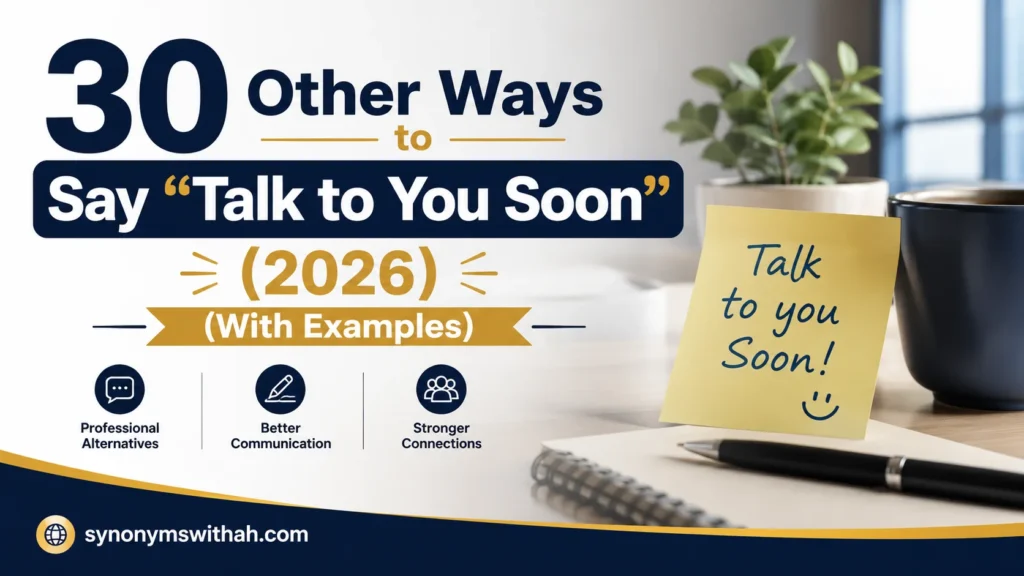

30 Other Ways to Say “Talk to You Soon” (2026) (With Examples) helps you choose warmer closings with confidence for every message and conversation today.
Although Talk to You Soon is a commonly used closing line, exploring other ways, an alternative, or several alternatives can make every conversation feel more personal, friendly, and meaningful. This guide offers 30 practical ideas with examples, real-life examples, and casual examples so you can find the best use for any situation. Choosing the right words, words, wording, phrase, expression, conversational phrase, thoughtful phrase, meaningful phrases, and closing expressions strengthens your communication, encourages meaningful communication, and helps you communicate with care. Whether you are ending a message, signing off, adding a sign-off, saying farewell, goodbye, closing, or closing the door while leaving it open for a future conversation, the right tone brings genuine care, clarity, confidence, and a kinder, warmer touch.
In my experience, improving writing, speaking, and everyday chatting starts with small changes. You can vary tone, improve your communication style, speaking style, conversation skills, conversational skills, language skills, and language fluency by choosing better expressions. Whether you talk, communicate, send a text, email, emails, make a call, join Zoom, publish a blog post, or keep in touch through messages, texting, or chats, the goal is to express yourself naturally. Using written English, spoken English, conversational English, business English, fluent English, common English, English, conversational language, formal language, and the right vocabulary helps you sound natural, sound confident, become more fluent, avoid repeating the same phrase, replace overused phrases, prevent repetitive wording, and keep your communication fresh, authentic, engaging, professional, business-friendly, formal, polite, and widely accepted.
What Does “Talk to You Soon” Mean?
The phrase “Talk to You Soon” is a friendly and reassuring way to end a conversation while expressing the expectation that another discussion will happen in the near future. It lets the other person know that the relationship or conversation is ongoing rather than ending permanently. Whether used in emails, phone calls, text messages, or face-to-face conversations, it creates a positive feeling by suggesting future communication.
In professional settings, it often indicates that another meeting, follow-up, or update is expected, while in personal conversations it reflects warmth and familiarity. Although the phrase is universally understood, choosing a more specific alternative can better suit the tone of your message and strengthen your communication.
READ ALSO: 30 Other Ways to Say “Thank You for Your Quick Response” (With Examples)
Is It Professional/Polite to Say “Talk to You Soon”?
Yes. “Talk to You Soon” is both polite and professional in many situations. It works well when you already have an established relationship with the other person, such as a coworker, manager, client, or friend. The phrase sounds approachable without being overly formal.
However, in highly formal business correspondence or when communicating with someone for the first time, alternatives like “I look forward to speaking with you,” “I’ll follow up soon,” or “We’ll be in touch” may sound more polished and appropriate. Choosing the right expression depends on your relationship with the recipient, the context, and the level of professionalism required.
Advantages and Disadvantages of Saying “Talk to You Soon”
Advantages
- Friendly and approachable for most conversations.
- Creates anticipation for future communication.
- Works in both personal and professional settings.
- Simple and easy to understand.
- Leaves conversations on a positive note.
Disadvantages
- Can become repetitive if used frequently.
- May sound too casual in highly formal business communication.
- Doesn’t specify when the next conversation will occur.
- Can feel generic if you want your message to be more personal.
- Some alternatives provide clearer expectations about future contact.
30 Alternatives to Say “Talk to You Soon”
- Speak with you soon
- Looking forward to speaking with you
- I’ll be in touch
- We’ll connect soon
- Catch up soon
- Looking forward to our next conversation
- Until next time
- Let’s stay in touch
- I’ll follow up soon
- I look forward to hearing from you
- We’ll talk again soon
- Keep me posted
- Let’s reconnect soon
- See you soon
- Until we speak again
- Have a great day until then
- I appreciate your time
- Let’s continue this later
- Expect to hear from me soon
- We’ll be in contact
- Feel free to reach out anytime
- I’ll check in soon
- Take care until we chat again
- Looking forward to catching up
- Let’s keep the conversation going
- I can’t wait to talk again
- We’ll touch base soon
- Looking forward to connecting again
- I’ll see you at our next meeting
- Have a wonderful day until we speak again
1. Speak with You Soon
Meaning
This phrase expresses your expectation that you’ll have another conversation in the near future.
Definition
A slightly more formal variation of “Talk to You Soon” commonly used in business and professional communication.
Detailed Explanation
“Speak with you soon” maintains a warm tone while sounding a little more polished. It’s suitable for emails, meetings, client conversations, and networking.
Scenario Example
“Thank you for your time today. I’ll review the proposal and speak with you soon regarding the next steps.”
Best Use
Professional emails, business meetings, and client follow-ups.
Tone
Professional, warm, and courteous.
2. Looking Forward to Speaking with You
Meaning
This phrase expresses excitement and appreciation for an upcoming conversation.
Definition
A courteous way of letting someone know you value your next interaction.
Detailed Explanation
Unlike a simple farewell, this expression emphasizes enthusiasm and respect. It’s especially effective in interviews, scheduled meetings, and formal correspondence.
Scenario Example
“Thank you for scheduling the meeting. I’m looking forward to speaking with you tomorrow.”
Best Use
Interviews, business emails, networking, and formal invitations.
Tone
Professional, optimistic, and respectful.
3. I’ll Be in Touch
Meaning
This phrase lets someone know that you will contact them again in the near future.
Definition
A professional closing expression used to promise future communication without specifying an exact date or time.
Detailed Explanation
“I’ll be in touch” is one of the most common alternatives to “Talk to You Soon.” It reassures the recipient that the conversation isn’t over and that you’ll reach out when you have updates, answers, or next steps. It’s suitable for both formal and semi-formal communication.
Scenario Example
“Thank you for discussing the project with me today. I’ll be in touch once I receive the final approval.”
Best Use
Business emails, interviews, client communication, and project updates.
Tone
Professional, reassuring, and polite.
4. We’ll Connect Soon
Meaning
This phrase expresses the expectation of meeting or communicating again shortly.
Definition
A modern and friendly expression that suggests another conversation or interaction will happen soon.
Detailed Explanation
“We’ll connect soon” sounds positive and collaborative. It is especially popular in workplaces, networking, and remote teams because it can refer to a phone call, video meeting, or in-person discussion.
Scenario Example
“Thanks for sharing your ideas today. We’ll connect soon to discuss the implementation plan.”
Best Use
Team meetings, networking, professional emails, and collaborative projects.
Tone
Friendly, professional, and encouraging.
5. Catch Up Soon
Meaning
This phrase suggests having another friendly conversation after some time has passed.
Definition
A casual expression used to indicate that you look forward to talking again and sharing updates.
Detailed Explanation
“Catch up soon” is often used between friends, coworkers, and colleagues who already know each other well. It implies a relaxed conversation rather than a formal meeting.
Scenario Example
“It’s been great hearing about your new job. Let’s catch up soon over coffee.”
Best Use
Friends, coworkers, former colleagues, and informal professional relationships.
Tone
Warm, relaxed, and conversational.
6. Looking Forward to Our Next Conversation
Meaning
This phrase communicates excitement about speaking again.
Definition
A thoughtful and professional way to express appreciation for future communication.
Detailed Explanation
Compared to simply saying “Talk to You Soon,” this expression places emphasis on the value of the next discussion. It shows genuine interest and leaves a positive impression.
Scenario Example
“Thank you for your valuable feedback today. I’m looking forward to our next conversation.”
Best Use
Business relationships, mentorships, interviews, and professional networking.
Tone
Professional, appreciative, and optimistic.
7. Until Next Time
Meaning
This phrase politely ends a conversation while suggesting another meeting or discussion in the future.
Definition
A timeless farewell used to acknowledge that you’ll meet or speak again.
Detailed Explanation
“Until next time” is flexible enough for both personal and professional settings. It creates a smooth ending without sounding overly formal or casual.
Scenario Example
“I enjoyed our discussion today. Until next time, take care and have a wonderful week.”
Best Use
Presentations, meetings, podcasts, personal conversations, and social interactions.
Tone
Friendly, warm, and respectful.
8. Let’s Stay in Touch
Meaning
This phrase encourages continued communication and maintaining the relationship.
Definition
A friendly invitation to keep communicating over time.
Detailed Explanation
“Let’s stay in touch” works particularly well after networking events, conferences, graduations, or job changes. It expresses a desire to preserve the connection.
Scenario Example
“It was wonderful meeting you at the conference. Let’s stay in touch and share future opportunities.”
Best Use
Networking, professional relationships, alumni connections, and friendships.
Tone
Friendly, sincere, and welcoming.
9. I’ll Follow Up Soon
Meaning
This phrase promises additional communication regarding a specific topic.
Definition
A professional expression indicating that you’ll provide more information or updates shortly.
Detailed Explanation
“I’ll follow up soon” creates clear expectations by assuring the recipient that you’ll contact them again with progress, answers, or decisions.
Scenario Example
“Thank you for your patience. I’ll follow up soon with the finalized proposal.”
Best Use
Customer service, project management, business emails, and sales communication.
Tone
Professional, dependable, and reassuring.
10. I Look Forward to Hearing from You
Meaning
This phrase expresses your hope that the other person will contact you.
Definition
A courteous closing statement commonly used in formal correspondence.
Detailed Explanation
Unlike “Talk to You Soon,” this expression shifts the next step to the recipient. It politely invites a response while maintaining professionalism.
Scenario Example
“Please let me know if you have any questions. I look forward to hearing from you.“
Best Use
Formal emails, job applications, customer inquiries, and business correspondence.
Tone
Professional, respectful, and courteous.
11. We’ll Talk Again Soon
Meaning
This phrase reassures someone that another conversation is expected in the near future.
Definition
A warm and positive closing statement that promises future communication.
Detailed Explanation
“We’ll talk again soon” is a natural alternative to “Talk to You Soon.” It sounds reassuring and emphasizes that the conversation is continuing rather than ending. This phrase works well in both personal and professional relationships.
Scenario Example
“Thanks for taking the time to meet today. We’ll talk again soon once the project moves to the next phase.”
Best Use
Business meetings, family conversations, and follow-up discussions.
Tone
Friendly, optimistic, and reassuring.
12. Keep Me Posted
Meaning
This phrase asks someone to continue sharing updates or new information.
Definition
A conversational expression used to encourage ongoing communication.
Detailed Explanation
“Keep me posted” is commonly used when you’re waiting for progress or developments. Rather than promising that you’ll speak again, it invites the other person to stay in contact by providing updates.
Scenario Example
“Good luck with your interview tomorrow. Keep me posted on how everything goes!”
Best Use
Work projects, personal updates, collaborative tasks, and ongoing situations.
Tone
Friendly, supportive, and conversational.
13. Let’s Reconnect Soon
Meaning
This phrase expresses a desire to resume communication after some time.
Definition
A polite invitation to meet or talk again in the near future.
Detailed Explanation
“Let’s reconnect soon” emphasizes rebuilding or continuing a relationship. It’s especially useful after networking events, business conferences, or long periods without communication.
Scenario Example
“It was wonderful catching up today. Let’s reconnect soon and discuss your new ideas.”
Best Use
Networking, former colleagues, business relationships, and friendships.
Tone
Professional, warm, and encouraging.
14. See You Soon
Meaning
This phrase expresses the expectation of seeing someone in person shortly.
Definition
A common farewell used when another meeting is already planned or expected.
Detailed Explanation
Although “See you soon” often refers to meeting face-to-face, it’s also commonly used after phone calls or online conversations. It creates a positive and familiar ending.
Scenario Example
“Have a safe trip home. See you soon at tomorrow’s meeting.”
Best Use
Friends, coworkers, family members, and scheduled meetings.
Tone
Friendly, cheerful, and casual.
15. Until We Speak Again
Meaning
This phrase politely closes a conversation while looking ahead to the next one.
Definition
A thoughtful farewell that expresses confidence in future communication.
Detailed Explanation
“Until we speak again” sounds slightly more elegant than “Talk to You Soon.” It works well in formal writing, speeches, newsletters, and professional correspondence.
Scenario Example
“Thank you for your continued support. Until we speak again, I wish you every success.”
Best Use
Formal emails, presentations, newsletters, and professional communication.
Tone
Professional, gracious, and sincere.
16. Have a Great Day Until Then
Meaning
This phrase wishes someone well while waiting for your next conversation.
Definition
A friendly farewell combined with a positive wish.
Detailed Explanation
Adding “Have a great day until then” makes your closing feel more personal and considerate. It communicates kindness while reminding the recipient that you’ll speak again soon.
Scenario Example
“I’ll send the revised document tomorrow. Have a great day until then!“
Best Use
Emails, customer service, colleagues, and friendly conversations.
Tone
Warm, thoughtful, and upbeat.
17. I Appreciate Your Time
Meaning
This phrase expresses gratitude before ending a conversation.
Definition
A respectful closing statement that acknowledges someone’s effort and attention.
Detailed Explanation
While it doesn’t directly promise another conversation, “I appreciate your time” naturally leads into future communication by ending the discussion on a positive and professional note.
Scenario Example
“Thank you for meeting with me today. I appreciate your time and look forward to our next discussion.”
Best Use
Interviews, client meetings, presentations, and professional emails.
Tone
Respectful, appreciative, and professional.
18. Let’s Continue This Later
Meaning
This phrase suggests pausing the conversation rather than ending it permanently.
Definition
A conversational expression indicating that the discussion will resume later.
Detailed Explanation
“Let’s continue this later” is useful when time is limited or when more information is needed before continuing. It signals that the conversation remains important.
Scenario Example
“We’re almost out of time today. Let’s continue this later during tomorrow’s meeting.”
Best Use
Meetings, brainstorming sessions, collaborative projects, and personal discussions.
Tone
Collaborative, friendly, and flexible.
19. Expect to Hear From Me Soon
Meaning
This phrase assures someone that you’ll contact them shortly.
Definition
A confident statement promising future communication.
Detailed Explanation
“Expect to hear from me soon” sets clear expectations and demonstrates reliability. It works particularly well when you’re responsible for the next step.
Scenario Example
“I’m reviewing your application today. Expect to hear from me soon regarding the decision.”
Best Use
Recruitment, customer support, sales, and business follow-ups.
Tone
Professional, confident, and dependable.
20. We’ll Be in Contact
Meaning
This phrase confirms that communication will continue in the future.
Definition
A formal and reassuring way to indicate future correspondence.
Detailed Explanation
“We’ll be in contact” is commonly used in professional settings where future communication is expected but the exact timing is uncertain. It sounds polished while maintaining a friendly tone.
Scenario Example
“Thank you for attending today’s meeting. We’ll be in contact regarding the next phase of the project.”
Best Use
Business communication, client relationships, interviews, and official correspondence.
Tone
Professional, courteous, and reassuring.
21. Feel Free to Reach Out Anytime
Meaning
This phrase encourages the other person to contact you whenever they need assistance or have questions.
Definition
A welcoming expression that keeps the lines of communication open and shows your willingness to help.
Detailed Explanation
“Feel free to reach out anytime” is an excellent alternative to “Talk to You Soon” when you want to emphasize accessibility. Rather than simply ending the conversation, it reassures the recipient that they are always welcome to get in touch. This phrase is especially valuable in customer service, mentorship, and professional relationships.
Scenario Example
“If any additional questions come up, feel free to reach out anytime. I’d be happy to help.”
Best Use
Customer support, mentoring, client communication, and professional networking.
Tone
Friendly, supportive, and approachable.
22. I’ll Check In Soon
Meaning
This phrase promises that you’ll contact someone later to see how things are progressing.
Definition
A thoughtful expression that indicates you’ll follow up after some time.
Detailed Explanation
“I’ll check in soon” shows care and attentiveness. Whether you’re following up on a project, someone’s well-being, or a recent event, it reassures the other person that you haven’t forgotten them.
Scenario Example
“I know you have a busy week ahead. I’ll check in soon to see how everything is going.”
Best Use
Workplace follow-ups, healthcare, coaching, friendships, and ongoing projects.
Tone
Caring, professional, and reassuring.
23. Take Care Until We Chat Again
Meaning
This phrase wishes someone well while expressing the expectation of another conversation.
Definition
A warm farewell that combines kindness with the promise of future communication.
Detailed Explanation
Adding “Take care” makes your goodbye feel more personal and heartfelt. It conveys genuine concern for the recipient while naturally suggesting that you’ll speak again before long.
Scenario Example
“Thanks for catching up with me today. Take care until we chat again!“
Best Use
Friends, family, close coworkers, and long-distance relationships.
Tone
Warm, caring, and sincere.
24. Looking Forward to Catching Up
Meaning
This phrase expresses excitement about your next conversation.
Definition
A friendly way to say that you anticipate speaking again and sharing updates.
Detailed Explanation
“Looking forward to catching up” works especially well when you haven’t spoken with someone for a while or have an upcoming meeting planned. It communicates enthusiasm while maintaining a relaxed and positive tone.
Scenario Example
“It’s been far too long. I’m looking forward to catching up next week.”
Best Use
Friends, colleagues, networking contacts, and former classmates.
Tone
Friendly, enthusiastic, and conversational.
25. Let’s Keep the Conversation Going
Meaning
This phrase encourages continued communication instead of ending the discussion.
Definition
A collaborative expression that invites ongoing dialogue.
Detailed Explanation
“Let’s keep the conversation going” is often used after productive discussions, brainstorming sessions, or networking events. It shows that you value the exchange of ideas and hope to continue it.
Scenario Example
“You shared some excellent insights today. Let’s keep the conversation going during our next meeting.”
Best Use
Business discussions, networking, teamwork, and collaborative projects.
Tone
Encouraging, professional, and engaging.
26. I Can’t Wait to Talk Again
Meaning
This phrase expresses genuine excitement about your next conversation.
Definition
An enthusiastic farewell that highlights your eagerness to reconnect.
Detailed Explanation
Unlike more formal alternatives, “I can’t wait to talk again” conveys strong enthusiasm and emotional warmth. It’s best suited for people you know well rather than formal business relationships.
Scenario Example
“This was such a fun conversation. I can’t wait to talk again!“
Best Use
Friends, family, close coworkers, and romantic relationships.
Tone
Excited, affectionate, and cheerful.
27. We’ll Touch Base Soon
Meaning
This phrase indicates that you’ll briefly reconnect to discuss updates or next steps.
Definition
A professional expression commonly used to schedule future communication.
Detailed Explanation
“We’ll touch base soon” is widely used in workplaces because it suggests a short follow-up conversation rather than a lengthy meeting. It keeps expectations clear while sounding professional.
Scenario Example
“I’ll gather the remaining information today, and we’ll touch base soon to review everything.”
Best Use
Business meetings, project management, client communication, and team collaboration.
Tone
Professional, collaborative, and confident.
28. Looking Forward to Connecting Again
Meaning
This phrase expresses your anticipation of speaking or meeting again.
Definition
A polished closing that emphasizes continued communication and relationship building.
Detailed Explanation
“Looking forward to connecting again” is an excellent option for maintaining professional relationships after conferences, interviews, or networking events. It leaves a positive and memorable impression.
Scenario Example
“Thank you for the insightful discussion today. I’m looking forward to connecting again in the near future.”
Best Use
Networking, business development, interviews, and professional emails.
Tone
Professional, optimistic, and respectful.
29. I’ll See You at Our Next Meeting
Meaning
This phrase confirms that you’ll meet again at a scheduled event.
Definition
A clear farewell is used when another meeting has already been arranged.
Detailed Explanation
If your next interaction is already planned, “I’ll see you at our next meeting” is more specific than “Talk to You Soon.” It removes uncertainty and reinforces the upcoming commitment.
Scenario Example
“Thanks everyone for your contributions today. I’ll see you at our next meeting on Monday morning.”
Best Use
Team meetings, recurring appointments, classrooms, and committee discussions.
Tone
Professional, friendly, and organized.
30. Have a Wonderful Day Until We Speak Again
Meaning
This phrase combines a kind farewell with the expectation of future communication.
Definition
A thoughtful closing that wishes the recipient well while expressing confidence that you’ll talk again.
Detailed Explanation
“Have a wonderful day until we speak again” adds warmth and positivity to your message. It is especially effective in emails, customer service interactions, and conversations where you want to leave a lasting positive impression.
Scenario Example
“Thank you for your continued support. Have a wonderful day until we speak again!“
Best Use
Professional emails, client communication, customer service, and personal messages.
Tone
Warm, courteous, and uplifting.
FAQs
1. Why should I use alternatives to “Talk to You Soon”?
Using different expressions helps your communication sound more natural and engaging. It also prevents your messages from feeling repetitive while matching the right tone for different situations.
2. Which alternative works best in professional communication?
For professional communication or business communication, choose polite and clear closings that fit the relationship and purpose of your email or message. A professional sign-off leaves a positive impression.
3. Can I use these phrases in both written English and spoken English?
Yes. Most alternatives work well in both written English and spoken English. Just adjust the wording based on whether you are speaking with a friend, colleague, or client.
4. How do I choose the right closing phrase?
Think about your audience, the context, and the tone you want to create. A warm, friendly phrase works well for casual chats, while a more formal option is better for business conversations.
5. Are these alternatives suitable for emails and text messages?
Absolutely. These phrases can be used in emails, text messages, online chats, and even phone calls. Choosing the right closing helps your conversation end naturally.
6. Will using different phrases improve my English?
Yes. Learning new expressions expands your vocabulary, improves your language skills, and helps you sound more fluent and confident in everyday communication.
7. What mistakes should I avoid when ending a conversation?
Avoid using the same closing repeatedly or choosing a phrase that does not match the situation. Picking an appropriate expression keeps your communication clear, polite, and meaningful.
8. How often should I vary my closing expressions?
There is no fixed rule. Switching between different closings based on the person and situation keeps your conversations fresh, personal, and authentic without sounding forced.
Conclusion
Finding the best way to end a conversation is about more than using different words. The right closing can show warmth, professionalism, and genuine care while helping your message feel memorable. As you explore these 30 Other Ways to Say “Talk to You Soon” (2026) (With Examples), you’ll build stronger communication habits, expand your vocabulary, and gain the confidence to choose the perfect phrase for every email, text, chat, or conversation. Small changes in your closing words can make a lasting difference in how people remember your message.