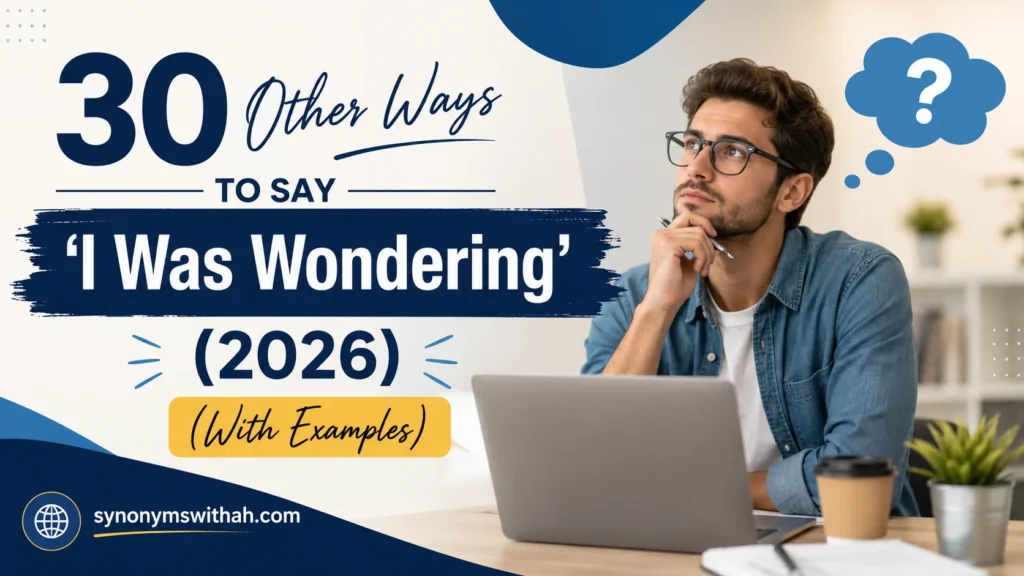

30 Other Ways to Say “I Was Wondering” (2026) (With Examples) helps you use “I Was Wondering” in English with a polite, gentle, and respectful tone. This phrase lets you ask questions, make a gentle request, or introduce an idea without sounding demanding or adding pressure. It fits emails, professional conversations, academic settings, and everyday conversation, creating a friendly, calm, natural conversational tone that supports professional communication, formal communication, and human communication through respect, courtesy, consideration, space, and a thoughtful response.
As your language, language learning, and language skills grow, you will discover many expression alternatives with better wording, request wording, phrasing, softer phrasing, sentence structure, and vocabulary. They help you ask for information, help, permission, check availability, or make requests politely with greater confidence. This guide includes 30 ideas along with 30+ options for 2026, offering alternatives, variation, examples, and explanations that are practical, modern, human-sounding, and suitable for students, professionals, and ESL learners. These choices improve better English, everyday English, conversational English, communication skills, clarity, context, interaction, and professionalism in both formal and informal situations.
What Does “I Was Wondering” Mean?
The phrase “I was wondering” is a polite and indirect way to introduce a question or request. Rather than asking something abruptly, it softens your words and shows consideration for the other person’s time and feelings.
People often use this expression in professional emails, workplace conversations, academic settings, and everyday communication because it creates a friendly and respectful tone. It can also make requests sound less demanding and encourage a positive response.
READ MORE: 30 Other Ways to Say “It Means a Lot to Me” (With Examples)
Is It Professional/Polite to Say “I Was Wondering”?
Yes. Saying “I was wondering” is generally considered both professional and polite. It demonstrates humility, courtesy, and respect, making it appropriate for emails to colleagues, clients, supervisors, teachers, and business partners.
However, using the same phrase repeatedly may make your writing feel repetitive. Learning alternative expressions allows you to adapt your tone, sound more confident, and communicate more naturally in different situations.
Advantages and Disadvantages of Saying “I Was Wondering”
Advantages
- Sounds polite and respectful.
- Softens requests without sounding demanding.
- Works well in professional emails.
- Creates a friendly and approachable tone.
- Suitable for formal and informal communication.
- Encourages positive responses.
Disadvantages
- Can become repetitive if overused.
- Sometimes sounds too indirect.
- May appear less confident than direct alternatives.
- Not ideal for urgent requests.
- Can make short emails longer than necessary.
- Doesn’t always fit high-level executive communication.
30 Formal Synonyms for “I Was Wondering”
- I Would Like to Know
- May I Ask
- I Would Appreciate Knowing
- Could You Please Tell Me
- I Wanted to Ask
- I Am Curious About
- Would You Mind Letting Me Know
- I Would Be Grateful If You Could Tell Me
- May I Inquire
- I Would Appreciate Your Guidance
- Could You Clarify
- I Hope You Can Help Me Understand
- Would You Kindly Explain
- May I Request Some Information
- Could You Provide More Details
- I Would Like Further Information
- May I Seek Clarification
- Would You Be Able to Confirm
- Could You Kindly Advise
- I Was Hoping You Could Explain
- May I Ask for Your Assistance
- Could You Help Me Understand
- Would You Please Confirm
- I Would Like Your Opinion
- May I Have More Information
- Could You Share More Details
- I Would Appreciate Your Insight
- May I Learn More About
- Would You Be Willing to Explain
- Could You Kindly Elaborate
1. I Would Like to Know
Meaning
A polite and straightforward way to express your interest in receiving information.
Definition
This phrase respectfully introduces a question or request while maintaining a professional tone.
Detailed Explanation
“I would like to know” is more direct than “I was wondering,” yet it remains courteous. It’s commonly used in business emails, customer service inquiries, and academic communication.
Scenario Example
“I would like to know whether the meeting has been rescheduled.”
Best Use
Professional emails, workplace requests, and formal inquiries.
Tone
Respectful, confident, and professional.
2. May I Ask
Meaning
A courteous way to ask permission before asking a question.
Definition
This expression introduces a question politely and shows respect for the listener.
Detailed Explanation
Using “May I ask” demonstrates excellent etiquette. It prepares the other person for your question while keeping the conversation friendly and professional.
Scenario Example
“May I ask when the final report will be available?”
Best Use
Meetings, interviews, presentations, and professional conversations.
Tone
Formal, polite, and considerate.
3. I Would Appreciate Knowing
Meaning
Expresses gratitude in advance while requesting information.
Definition
A professional phrase used to politely ask someone to share details or updates.
Detailed Explanation
This alternative emphasizes that you value the other person’s assistance. It works especially well when requesting information from clients, managers, or colleagues.
Scenario Example
“I would appreciate knowing the expected delivery date.”
Best Use
Business emails, client communication, and follow-up messages.
Tone
Warm, appreciative, and professional.
4. Could You Please Tell Me
Meaning
A respectful request for information.
Definition
A polite expression used to ask someone to explain or provide details.
Detailed Explanation
Adding “please” makes this phrase courteous without sounding overly formal. It’s easy to understand and suitable for nearly every professional situation.
Scenario Example
“Could you please tell me where I can access the updated documents?”
Best Use
Customer support, workplace communication, and formal emails.
Tone
Friendly, polite, and professional.
5. I Wanted to Ask
Meaning
Introduces a question in a natural and conversational way.
Definition
A polite phrase that signals you have a question or request to make.
Detailed Explanation
Although slightly more conversational than “I was wondering,” this expression remains appropriate for professional settings. It helps your request feel genuine while maintaining a respectful tone.
Scenario Example
“I wanted to ask if you’re available for a brief meeting tomorrow afternoon.”
Best Use
Emails to colleagues, networking messages, and workplace discussions.
Tone
Friendly, sincere, and professional.
6. I Am Curious About
Meaning
A polite way to express genuine interest in learning more about a topic or situation.
Definition
This phrase indicates that you would like additional information while keeping the conversation friendly and respectful.
Detailed Explanation
“I am curious about” works well when you’re seeking knowledge rather than making a direct request. It shows enthusiasm and encourages open discussion without sounding demanding.
Scenario Example
“I am curious about how your team approaches this process.”
Best Use
Professional discussions, networking conversations, and educational settings.
Tone
Interested, respectful, and conversational.
7. Would You Mind Letting Me Know
Meaning
A courteous request for someone to provide information.
Definition
This expression politely asks another person to share details or an update.
Detailed Explanation
Using “Would you mind letting me know” makes your request feel considerate. It acknowledges the other person’s time and is especially useful when asking for updates or confirmations.
Scenario Example
“Would you mind letting me know when the project is finalized?”
Best Use
Follow-up emails, workplace communication, and client correspondence.
Tone
Polite, considerate, and professional.
8. I Would Be Grateful If You Could Tell Me
Meaning
Expresses appreciation while requesting information.
Definition
A formal phrase used to ask someone for details in a respectful manner.
Detailed Explanation
This alternative conveys gratitude before the person even responds. It is ideal when communicating with supervisors, clients, or individuals you want to address with extra courtesy.
Scenario Example
“I would be grateful if you could tell me whether my application has been received.”
Best Use
Formal emails, customer inquiries, and business communication.
Tone
Grateful, respectful, and professional.
9. May I Inquire
Meaning
A formal way to ask a question.
Definition
This phrase politely requests permission to seek information.
Detailed Explanation
“May I inquire” is commonly used in business, legal, and academic environments. It sounds polished and demonstrates professionalism while keeping your request respectful.
Scenario Example
“May I inquire about the timeline for the upcoming project?”
Best Use
Formal business correspondence, official letters, and professional emails.
Tone
Formal, courteous, and confident.
10. I Would Appreciate Your Guidance
Meaning
A respectful request for someone’s advice or expertise.
Definition
This expression asks for assistance while recognizing the other person’s knowledge and experience.
Detailed Explanation
Choosing this phrase shows humility and appreciation. It is particularly effective when speaking with mentors, managers, instructors, or experienced colleagues.
Scenario Example
“I would appreciate your guidance on the next steps for this assignment.”
Best Use
Mentorship, workplace discussions, and academic communication.
Tone
Respectful, appreciative, and sincere.
11. Could You Clarify
Meaning
A polite request for additional explanation.
Definition
This phrase asks someone to make information clearer or easier to understand.
Detailed Explanation
“Could you clarify” is concise yet professional. It helps avoid misunderstandings and encourages the other person to explain their point without sounding confrontational.
Scenario Example
“Could you clarify the deadline mentioned in your previous email?”
Best Use
Meetings, project discussions, and email communication.
Tone
Professional, direct, and courteous.
12. I Hope You Can Help Me Understand
Meaning
Shows that you would like assistance in understanding something.
Definition
A warm and respectful phrase used to request clarification or explanation.
Detailed Explanation
This alternative expresses openness to learning while making the other person feel valued. It creates a collaborative tone and is suitable for both professional and educational conversations.
Scenario Example
“I hope you can help me understand the new company policy.”
Best Use
Training sessions, workplace discussions, and academic settings.
Tone
Warm, respectful, and collaborative.
13. Would You Kindly Explain
Meaning
A formal request for a detailed explanation.
Definition
This phrase politely asks someone to explain a topic or process.
Detailed Explanation
Adding “kindly” makes the request sound especially courteous. It is often used in formal business communication where professionalism is important.
Scenario Example
“Would you kindly explain how the approval process works?”
Best Use
Business correspondence, official requests, and client communication.
Tone
Formal, courteous, and respectful.
14. May I Request Some Information
Meaning
A polite way to ask for specific details.
Definition
This expression formally introduces a request for information or documentation.
Detailed Explanation
This phrase is appropriate when contacting organizations, businesses, or institutions. It demonstrates professionalism while keeping your request clear and respectful.
Scenario Example
“May I request some information regarding your training programs?”
Best Use
Official inquiries, business emails, and customer service communication.
Tone
Professional, formal, and polite.
15. Could You Provide More Details
Meaning
A respectful request for additional information.
Definition
This phrase asks someone to expand on what they have already shared.
Detailed Explanation
When the available information isn’t enough, “Could you provide more details” encourages a fuller explanation without sounding critical. It is one of the most versatile alternatives to “I was wondering.”
Scenario Example
“Could you provide more details about the implementation schedule?”
Best Use
Project discussions, client meetings, and professional emails.
Tone
Clear, professional, and courteous.
16. I Would Like Further Information
Meaning
A professional way to request additional details about a topic.
Definition
This phrase politely expresses your desire to receive more information before making a decision or taking action.
Detailed Explanation
“I would like further information” is commonly used in business and academic settings. It communicates that you need more context while remaining respectful and professional.
Scenario Example
“I would like further information regarding the upcoming training sessions.”
Best Use
Business inquiries, formal emails, and customer support requests.
Tone
Professional, courteous, and direct.
17. May I Seek Clarification
Meaning
A respectful way to ask someone to explain something more clearly.
Definition
This expression politely requests clarification to ensure accurate understanding.
Detailed Explanation
Using “May I seek clarification” shows that you value clear communication. It is especially useful during meetings, negotiations, or discussions involving important details.
Scenario Example
“May I seek clarification on the revised project deadline?”
Best Use
Professional meetings, workplace communication, and official correspondence.
Tone
Formal, respectful, and thoughtful.
18. Would You Be Able to Confirm
Meaning
A polite request asking someone to verify information.
Definition
This phrase seeks confirmation while maintaining a professional tone.
Detailed Explanation
“Would you be able to confirm” is ideal when you need to verify dates, schedules, documents, or decisions. It sounds respectful without being overly formal.
Scenario Example
“Would you be able to confirm whether the payment has been processed?”
Best Use
Business emails, follow-ups, and client communication.
Tone
Professional, polite, and confident.
19. Could You Kindly Advise
Meaning
A courteous request for guidance or recommendations.
Definition
This phrase asks another person to provide advice or direction.
Detailed Explanation
This alternative demonstrates respect for the recipient’s expertise. It is frequently used when communicating with managers, consultants, or experienced professionals.
Scenario Example
“Could you kindly advise me on the next steps for completing the application?”
Best Use
Professional emails, workplace discussions, and formal requests.
Tone
Respectful, appreciative, and professional.
20. I Was Hoping You Could Explain
Meaning
A polite expression used to request an explanation.
Definition
This phrase introduces a question gently while showing appreciation for the other person’s assistance.
Detailed Explanation
Compared with “I was wondering,” this alternative sounds more personal and collaborative. It helps create a positive atmosphere while requesting clarification.
Scenario Example
“I was hoping you could explain how the new reporting system works.”
Best Use
Workplace conversations, training sessions, and email communication.
Tone
Friendly, respectful, and sincere.
21. May I Ask for Your Assistance
Meaning
A formal way to request someone’s help.
Definition
This expression politely asks another person for support or guidance.
Detailed Explanation
Using “May I ask for your assistance” communicates humility and professionalism. It is particularly appropriate when requesting help with important or complex matters.
Scenario Example
“May I ask for your assistance in reviewing this proposal?”
Best Use
Business correspondence, academic communication, and professional requests.
Tone
Formal, respectful, and appreciative.
22. Could You Help Me Understand
Meaning
A polite request for clarification or explanation.
Definition
This phrase asks someone to make a topic easier to understand.
Detailed Explanation
This alternative encourages collaboration rather than simply requesting information. It makes the other person feel valued while inviting them to share their knowledge.
Scenario Example
“Could you help me understand the requirements for this project?”
Best Use
Meetings, workplace discussions, educational settings, and mentoring.
Tone
Warm, collaborative, and professional.
23. Would You Please Confirm
Meaning
A courteous request to verify information.
Definition
This phrase politely asks someone to confirm that information is correct.
Detailed Explanation
“Would you please confirm” is commonly used when accuracy is important. It is ideal for confirming appointments, schedules, payments, and project updates.
Scenario Example
“Would you please confirm your availability for Thursday’s meeting?”
Best Use
Professional emails, scheduling, and business communication.
Tone
Professional, polite, and direct.
24. I Would Like Your Opinion
Meaning
A respectful way to ask for someone’s thoughts or perspective.
Definition
This phrase requests another person’s opinion while acknowledging their experience or expertise.
Detailed Explanation
Choosing this expression shows that you value the recipient’s judgment. It encourages meaningful discussion and demonstrates respect for their viewpoint.
Scenario Example
“I would like your opinion on the proposed marketing strategy.”
Best Use
Team meetings, performance reviews, brainstorming sessions, and professional discussions.
Tone
Respectful, collaborative, and thoughtful.
25. May I Have More Information
Meaning
A polite request for additional details.
Definition
This expression asks someone to provide further information before you proceed.
Detailed Explanation
“May I have more information” is simple, professional, and versatile. It works well in both written and spoken communication when you need extra details to make an informed decision.
Scenario Example
“May I have more information about the membership benefits?”
Best Use
Customer inquiries, formal emails, workplace communication, and business discussions.
Tone
Courteous, professional, and friendly.
26. Could You Share More Details
Meaning
A polite and professional way to ask someone for additional information.
Definition
This phrase respectfully requests a more detailed explanation about a topic, project, or situation.
Detailed Explanation
“Could you share more details” is an excellent alternative to “I was wondering” when you need a clearer understanding of something. It encourages the other person to elaborate without making your request sound demanding. Because it is both courteous and straightforward, it fits a wide range of professional and personal conversations.
Scenario Example
“Could you share more details about the onboarding process for new employees?”
Best Use
Business emails, client communication, meetings, and project discussions.
Tone
Professional, friendly, and respectful.
27. I Would Appreciate Your Insight
Meaning
A respectful way to ask for someone’s knowledge, opinion, or expertise.
Definition
This expression politely requests another person’s perspective while recognizing their experience.
Detailed Explanation
Using “I would appreciate your insight” shows that you value the recipient’s expertise. Rather than simply asking a question, it communicates that you trust their judgment and would benefit from their advice. This makes it especially effective in professional relationships.
Scenario Example
“I would appreciate your insight on the best approach for presenting this proposal.”
Best Use
Leadership discussions, mentoring, workplace collaboration, and strategic planning.
Tone
Respectful, appreciative, and professional.
28. May I Learn More About
Meaning
A courteous way to express interest in receiving additional information.
Definition
This phrase politely introduces a request to explore a topic in greater depth.
Detailed Explanation
“May I learn more about” communicates curiosity while maintaining a formal tone. It is ideal when discussing products, services, opportunities, or educational subjects. The phrase encourages an informative response without sounding overly direct.
Scenario Example
“May I learn more about your organization’s internship program?”
Best Use
Networking, educational settings, interviews, and professional inquiries.
Tone
Curious, respectful, and professional.
29. Would You Be Willing to Explain
Meaning
A polite request asking someone if they can provide an explanation.
Definition
This expression respectfully asks another person to explain a concept, decision, or process.
Detailed Explanation
This alternative softens your request by giving the other person the opportunity to respond comfortably. It demonstrates courtesy and creates a collaborative atmosphere, making it suitable for both formal and informal professional communication.
Scenario Example
“Would you be willing to explain how the new reporting system works?”
Best Use
Training sessions, workplace discussions, academic communication, and client meetings.
Tone
Warm, considerate, and professional.
30. Could You Kindly Elaborate
Meaning
A formal way to ask someone to provide a more detailed explanation.
Definition
This phrase politely requests additional information to improve understanding.
Detailed Explanation
“Could you kindly elaborate” is one of the most professional alternatives to “I was wondering.” It encourages the other person to expand on their explanation while maintaining a respectful and courteous tone. This phrase is especially useful when discussing complex topics or important decisions.
Scenario Example
“Could you kindly elaborate on the proposed implementation timeline?”
Best Use
Executive communication, formal emails, presentations, and business meetings.
Tone
Formal, professional, and respectful.
FAQs
Is “I was wondering” a polite phrase?
Yes. I was wondering if it is considered a polite and respectful way to ask a question or make a request. It softens your message and helps you sound friendly instead of demanding.
Can I use “I was wondering” in professional emails?
Absolutely. It works well in professional emails because it creates a courteous tone. However, using different alternatives can make your writing sound more confident and less repetitive.
Is “I was wondering” formal or informal?
It can be used in both formal and informal situations. In business or academic writing, it is polite and acceptable, but some alternatives may sound more direct and professional.
Why should I use alternatives to “I was wondering”?
Using alternatives improves your vocabulary and keeps your communication fresh. It also helps you match your tone to different situations, whether you need to sound formal, friendly, or confident.
What are the best situations to use “I was wondering”?
This phrase is ideal when asking for information, requesting help, checking availability, introducing an idea, or making a polite inquiry in emails, meetings, and everyday conversations.
Is “I was wondering” grammatically correct?
Yes. Although it uses the past tense, it commonly refers to a present request or question. This structure makes the sentence sound softer and more polite.
Can ESL learners use “I was wondering”?
Yes. It is one of the most useful phrases for ESL learners because it helps them communicate politely in both personal and professional settings.
How can I sound more confident while staying polite?
Choose an alternative that matches the situation. A direct but respectful expression often sounds more confident while still showing courtesy and professionalism.
Conclusion
Learning 30 Other Ways to Say “I Was Wondering” (2026) (With Examples) gives you more than just new phrases—it helps you communicate with confidence and clarity. Whether you are writing an email, asking a question, making a request, or starting a professional conversation, choosing the right expression makes a noticeable difference. By using these alternatives naturally, you can improve your English, avoid repetition, and adapt your tone to any formal or informal situation while remaining polite and respectful.