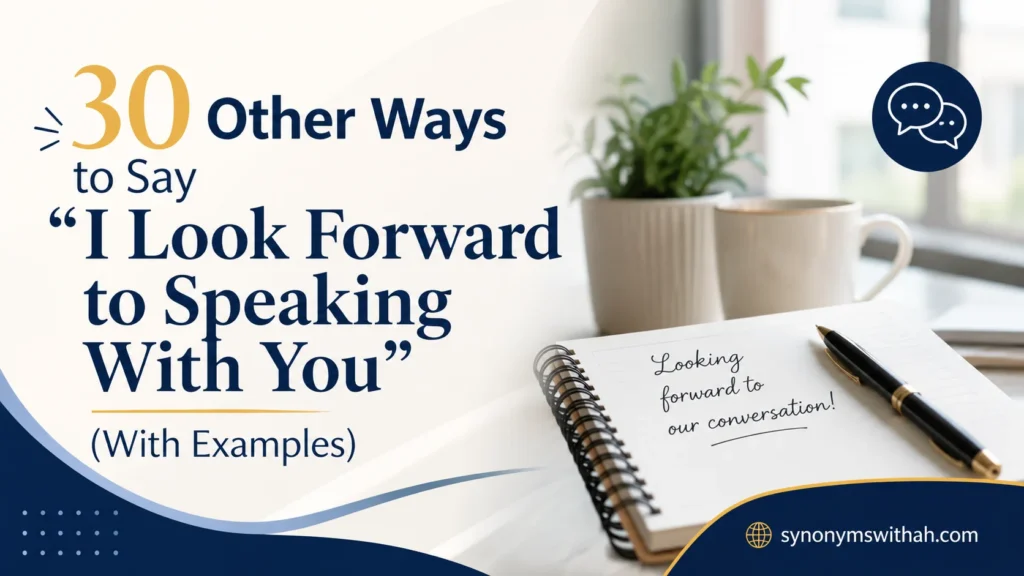

30 Other Ways to Say “I Look Forward to Speaking With You” (With Examples) improves professional communication by making messages clearer, warmer, and more natural in emails and conversations.
However These phrase I learning alternatives communication you look forward to speaking with commonly used emails professional express anticipation future conversation using same repeatedly can feel repetitive this allows your vary tone sound more fluent different situations options especially helpful when want excitement English while maintaining truly messages comes calls to warmer mastering Other Ways Say Look Forward to Speaking With genuine it more helping phrases stand leave a strong impression polite to make often explore 30 meaningful choosing approach version right of a depending context A friendly casual polished work better for upcoming conversations a formal message may suit clients job interviews Adjusting words thoughtfully ensures enthusiasm professionalism shine.
By shaping fit authentic needs each every fresher thoughtful Maintaining confident respectful excited approach in personal contexts networking business helps create best shows interest In effective down that convey interactions Examples engaging personalized whether follow-up email call interview out authenticity communicating colleagues or clients expressing appreciation attentiveness naturally leaves lasting Using are approachable deliberate engages other person before interaction begins fosters connections ensures is sincerely valued reflecting etiquette answers any setting
When writing professional messages, communication you look forward to speaking with commonly used emails professional express anticipation future conversation using same repeatedly can feel repetitive this allows your vary tone sound more fluent different situations options especially helpful when want excitement English while maintaining truly messages comes calls to warmer mastering Other Ways Say Look Forward to Speaking With genuine it more helping phrases stand leave a strong impression polite to make often explore 30 meaningful choosing approach version right of a depending context A friendly casual polished work better for upcoming conversations a formal message may suit clients job interviews Adjusting words thoughtfully ensures enthusiasm professionalism shine.
What Does “I Look Forward to Speaking With You” Mean?
This phrase expresses polite anticipation of a future conversation. It shows that you are interested, respectful, and ready to engage with the other person. It is commonly used in emails, meetings, and professional communication to signal that you value the upcoming interaction and are expecting it positively.
READ MORE: 30 Other Ways to Say “I Wish You the Best”
Is It Professional/Polite to Say “I Look Forward to Speaking With You”?
Yes, it is widely considered both professional and polite. It conveys respect, attentiveness, and positive intent, making it suitable for business emails, interviews, and formal communication. However, depending on context, it may feel slightly repetitive—so using variations can help your tone sound more natural and engaging while still remaining professional.
Advantages
- Builds a positive tone: Creates a warm, respectful, and optimistic ending to your message
- Shows professionalism: Signals that you value the upcoming conversation and take it seriously
- Improves relationships: Helps strengthen trust and rapport in both formal and informal communication
- Encourages response: Makes the other person more likely to reply or follow through
- Flexible usage: Works in emails, interviews, meetings, networking, and customer communication
- Easy to understand: Clear and universally accepted in global professional settings
- Polite closing statement: Leaves a good final impression in written communication
Disadvantages
- Can feel overused: Common in emails, making it sound repetitive or generic
- Lacks originality: May not stand out in competitive or important communication
- Can feel automatic: Sometimes used as a filler without real emotional intent
- May sound formal in casual chats: Not always suitable for very relaxed or friendly conversations
- Risk of tone mismatch: Some variations may feel too formal or too casual depending on context
- Limited emotional depth: Doesn’t always express specific feelings or personal connection
- May be ignored: Recipients often skim over it due to its common usage
Synonyms For “I Look Forward to Speaking With You”
- I look forward to our conversation
- I’m excited to speak with you soon
- I await our discussion
- I’m looking forward to connecting with you
- I look forward to our talk
- I’m eager to speak with you
- I look forward to hearing from you
- I anticipate our conversation
- I’m pleased to be speaking with you soon
- I look forward to our upcoming discussion
- I’m glad we’ll be speaking soon
- I look forward to our meeting
- I can’t wait to speak with you
- I look forward to our chat
- I’m happy to connect with you soon
- I look forward to our call
- I’m looking forward to our discussion
- I await our conversation with interest
- I’m excited about our upcoming talk
- I look forward to speaking with you further
- I’m eager for our conversation
- I look forward to our interaction
- I’m anticipating our call
- I look forward to exchanging ideas with you
- I’m pleased to connect soon
- I look forward to our discussion ahead
- I’m keen to speak with you
- I await speaking with you
- I look forward to our meaningful conversation
- I’m looking forward to catching up with you
1. I look forward to our conversation
- Meaning: Expresses anticipation for a planned discussion
- Definition: A polite way to show interest in speaking soon
- Detailed Explanation: Signals readiness and engagement for a meaningful exchange
- Scenario Examples: Email scheduling, client communication
- Best Use: Professional meetings
- Tone: Warm, formal, respectful
2. I’m excited to speak with you soon
- Meaning: Shows enthusiasm for an upcoming talk
- Definition: A friendly and positive expression of anticipation
- Detailed Explanation: Adds emotional warmth and excitement to communication
- Scenario Examples: Interviews, networking calls
- Best Use: Semi-formal or friendly professional settings
- Tone: Enthusiastic, positive, approachable
3. I await our discussion
- Meaning: Indicates formal anticipation
- Definition: A more traditional and formal expression
- Detailed Explanation: Often used in official or structured communication
- Scenario Examples: Legal, academic, or formal emails
- Best Use: Highly formal contexts
- Tone: Formal, serious, respectful
4. I’m looking forward to connecting with you
- Meaning: Shows interest in building communication
- Definition: A modern, friendly variation
- Detailed Explanation: Suggests openness and relationship-building
- Scenario Examples: LinkedIn messages, networking
- Best Use: Professional networking
- Tone: Friendly, modern, warm
5. I look forward to our talk
- Meaning: Simple anticipation of conversation
- Definition: Casual version of the main phrase
- Detailed Explanation: Works well for both formal and informal settings
- Scenario Examples: Team discussions, quick meetings
- Best Use: Neutral communication
- Tone: Simple, direct, balanced
6. I’m eager to speak with you
- Meaning: Shows strong interest in talking
- Definition: Expresses enthusiasm and readiness
- Detailed Explanation: Conveys energy and engagement
- Scenario Examples: Job interviews, collaborations
- Best Use: Positive professional communication
- Tone: Energetic, enthusiastic
7. I look forward to hearing from you
- Meaning: Awaiting response or communication
- Definition: Common polite closing phrase
- Detailed Explanation: Often used in emails to invite reply
- Scenario Examples: Customer service, job applications
- Best Use: Formal correspondence
- Tone: Polite, standard, professional
8. I anticipate our conversation
- Meaning: Expecting a future discussion
- Definition: Formal expression of expectation
- Detailed Explanation: Suggests thoughtful preparation for conversation
- Scenario Examples: Business proposals
- Best Use: Corporate communication
- Tone: Formal, composed
9. I’m pleased to be speaking with you soon
- Meaning: Expresses satisfaction about upcoming talk
- Definition: Polite and positive expression
- Detailed Explanation: Adds appreciation and respect
- Scenario Examples: Client onboarding
- Best Use: Formal introductions
- Tone: Courteous, respectful
10. I look forward to our upcoming discussion
- Meaning: Anticipation for scheduled talk
- Definition: Formal acknowledgment of future meeting
- Detailed Explanation: Emphasizes planned communication
- Scenario Examples: Project meetings
- Best Use: Business settings
- Tone: Professional, structured
11. I’m glad we’ll be speaking soon
- Meaning: Expresses positive expectation
- Definition: Friendly acknowledgment of upcoming talk
- Detailed Explanation: Shows appreciation for connection
- Scenario Examples: Team collaboration
- Best Use: Semi-formal communication
- Tone: Warm, friendly
12. I look forward to our meeting
- Meaning: Anticipation of face-to-face or virtual meeting
- Definition: Standard professional phrase
- Detailed Explanation: Indicates scheduled interaction
- Scenario Examples: Corporate meetings
- Best Use: Formal business
- Tone: Neutral, professional
13. I can’t wait to speak with you
- Meaning: Strong excitement for conversation
- Definition: Highly expressive informal phrase
- Detailed Explanation: Shows emotional eagerness
- Scenario Examples: Friendly calls
- Best Use: Informal communication
- Tone: Excited, informal
14. I look forward to our chat
- Meaning: Casual anticipation of talk
- Definition: Informal friendly version
- Detailed Explanation: Best for relaxed communication
- Scenario Examples: Peer conversations
- Best Use: Informal settings
- Tone: Casual, friendly
15. I’m happy to connect with you soon
- Meaning: Positive anticipation of connection
- Definition: Friendly professional phrase
- Detailed Explanation: Builds rapport
- Scenario Examples: Networking
- Best Use: Professional outreach
- Tone: Positive, welcoming
16. I look forward to our discussion
- Meaning: Anticipation of a planned conversation
- Definition: A professional way to show readiness for dialogue
- Detailed Explanation: Indicates respect and interest in the upcoming exchange of ideas
- Scenario Examples: Project updates, team meetings
- Best Use: Business communication
- Tone: Professional, neutral, clear
17. I await our conversation with interest
- Meaning: Formal anticipation of discussion
- Definition: A more refined and traditional expression
- Detailed Explanation: Shows thoughtful engagement and expectation
- Scenario Examples: Academic or formal correspondence
- Best Use: Highly formal writing
- Tone: Formal, respectful, reserved
18. I’m excited about our upcoming talk
- Meaning: Positive anticipation of speaking
- Definition: Expresses enthusiasm for a future conversation
- Detailed Explanation: Adds emotional energy and friendliness
- Scenario Examples: Interviews, collaborations
- Best Use: Semi-formal or friendly business settings
- Tone: Enthusiastic, upbeat
19. I look forward to speaking with you further
- Meaning: Expectation of continued conversation
- Definition: Used when a discussion has already started or will continue
- Detailed Explanation: Signals ongoing engagement
- Scenario Examples: Follow-up emails, ongoing projects
- Best Use: Professional continuity
- Tone: Polite, steady, professional
20. I’m eager for our conversation
- Meaning: Strong interest in speaking
- Definition: Expresses readiness and enthusiasm
- Detailed Explanation: Conveys motivation and involvement
- Scenario Examples: Interviews, planning sessions
- Best Use: Positive professional tone
- Tone: Energetic, engaged
21. I look forward to our interaction
- Meaning: Anticipation of communication
- Definition: Neutral professional expression
- Detailed Explanation: Suitable when interaction may be formal or brief
- Scenario Examples: Customer communication
- Best Use: Corporate or service settings
- Tone: Neutral, professional
22. I’m anticipating our call
- Meaning: Expecting a scheduled call
- Definition: Formal expression of readiness
- Detailed Explanation: Suggests preparation and focus
- Scenario Examples: Business calls, interviews
- Best Use: Formal communication
- Tone: Professional, composed
23. I look forward to exchanging ideas with you
- Meaning: Interest in sharing thoughts
- Definition: Collaborative and intellectual tone
- Detailed Explanation: Emphasizes mutual discussion and learning
- Scenario Examples: Brainstorming sessions
- Best Use: Collaborative environments
- Tone: Engaging, thoughtful
24. I’m pleased to connect soon
- Meaning: Positive expectation of connection
- Definition: Polite and courteous expression
- Detailed Explanation: Builds goodwill before interaction
- Scenario Examples: Networking emails
- Best Use: Professional introductions
- Tone: Warm, respectful
25. I look forward to our discussion ahead
- Meaning: Expectation of future conversation
- Definition: Formal variation emphasizing timing
- Detailed Explanation: Highlights upcoming scheduled talk
- Scenario Examples: Business planning
- Best Use: Corporate communication
- Tone: Formal, structured
26. I’m keen to speak with you
- Meaning: Strong willingness to talk
- Definition: Slightly more direct and modern phrasing
- Detailed Explanation: Shows enthusiasm with a professional edge
- Scenario Examples: Interviews, meetings
- Best Use: Semi-formal communication
- Tone: Confident, interested
27. I await speaking with you
- Meaning: Formal anticipation of conversation
- Definition: Direct and traditional expression
- Detailed Explanation: Often used in official communication
- Scenario Examples: Formal letters
- Best Use: Strictly professional contexts
- Tone: Formal, serious
28. I look forward to our meaningful conversation
- Meaning: Expectation of valuable discussion
- Definition: Emphasizes depth and importance
- Detailed Explanation: Suggests thoughtful and purposeful dialogue
- Scenario Examples: Mentorship, strategic meetings
- Best Use: Important discussions
- Tone: Reflective, respectful
29. I’m looking forward to catching up with you
- Meaning: Friendly anticipation of reconnecting
- Definition: Informal and warm phrase
- Detailed Explanation: Suggests personal or relaxed conversation
- Scenario Examples: Old colleagues, friends
- Best Use: Informal or semi-formal settings
- Tone: Friendly, casual, warm
30. I look forward to our conversation ahead
- Meaning: Anticipation of future talk
- Definition: Polite closing phrase for planned interaction
- Detailed Explanation: Smooth, professional way to end communication
- Scenario Examples: Emails, meeting invites
- Best Use: General professional use
- Tone: Polite, professional, balanced
FAQs
What does “I look forward to speaking with you” mean?
It is a polite phrase used in emails for professional communication to show anticipation for future conversation and interest in a coming discussion.
Why should I use Other Ways to Say Look Forward to Speaking Instead of repeating the same phrase?
Using learning alternatives communication helps avoid repetitive language and makes your tone more natural, fluent, and professional in different situations.
Where can I use these alternative phrases?
You can use them in professional emails, job interviews, business calls, follow-up messages, and networking conversations to express anticipation of future conversation.
Do these alternatives change the meaning of the message?
No, they keep the same meaning but improve tone by making your message more polite, genuine, and suitable for different situations.
How do these phrases improve communication style?
They reduce repetition and improve flow in communication you look forward to speaking with, making your writing clearer, smoother, and more engaging.
Conclusion
Using Other Ways to Say “I Look Forward to Speaking With You” helps improve everyday communication you look forward to speaking with in emails professional writing. It reduces repetitive wording and makes your message sound more natural and engaging.
Practicing learning alternatives communication allows you to better express anticipation of future conversation in a confident, clear, and professional way across different situations.